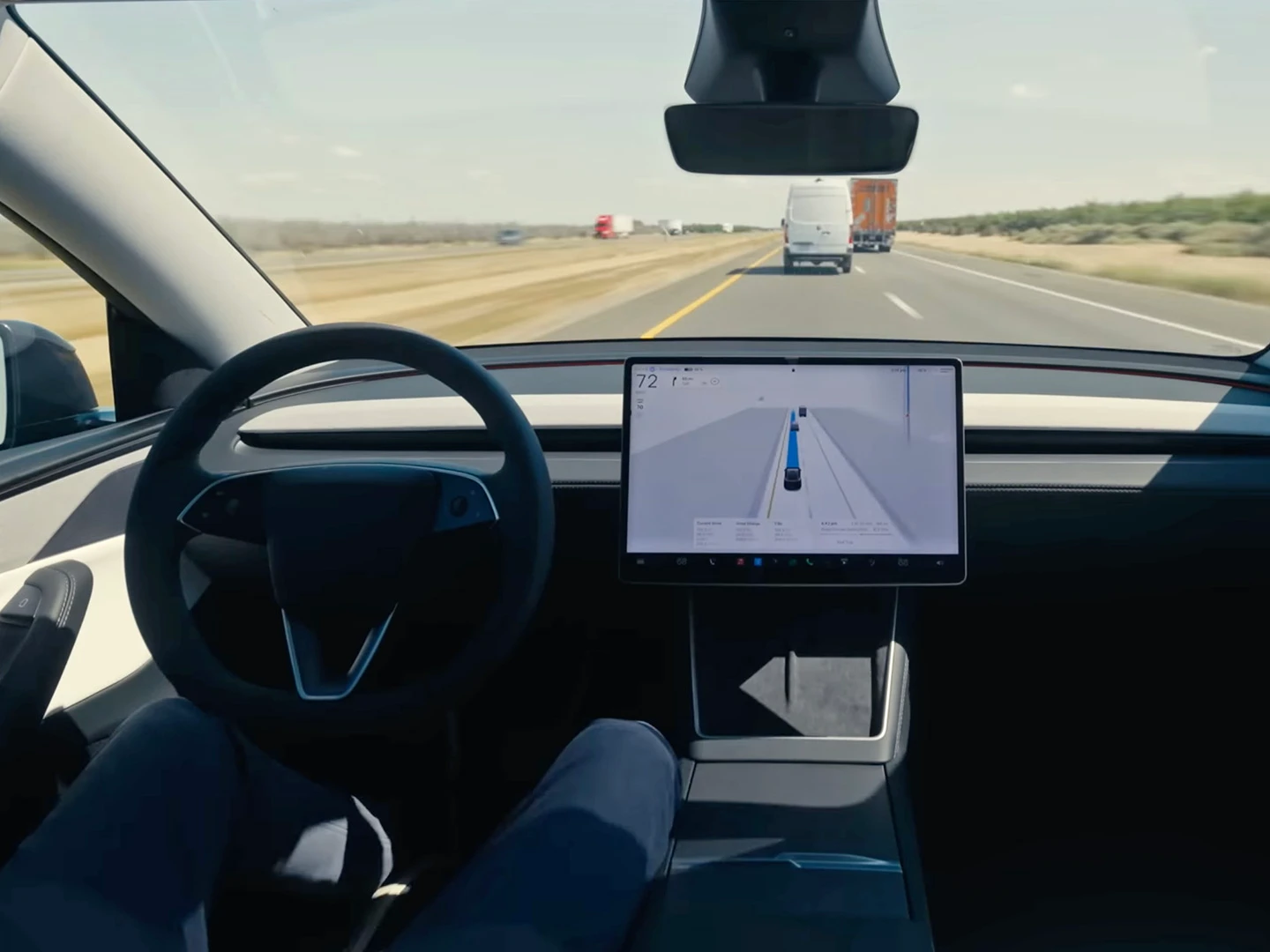
In the great saga of self-driving ambition, Tesla has now rolled out FSD (Supervised) version 14 — a software leap (or at least a very determined forward shuffle) that the company says substantially upgrades its autonomy stack. According to commentary, v14 brings:
- A more unified architecture: perception, planning and control are more tightly integrated. (TESMAG)
- Smoother behaviour in complex conditions: lane merges, urban intersections, path planning. (TESMAG)
- A “public” rollout rather than an extremely limited beta, signalling Tesla’s confidence (or at least its willingness to test in the wild). (TESMAG)
It is as though Tesla has given its FSD brain a good breakfast, more coffee, and told it “Now go out and behave more like a sensible chauffeur, not a distracted teenager.” One might imagine the car sighing, adjusting its tie, and saying politely to pedestrian and cyclist alike, “After you, please.”
HW3 vs HW4: The hardware cliff and the upgrades
Now, one cannot talk about FSD updates without talking about the hardware beneath it — for the truth is that even the cleverest software may stumble if the tin beneath rattles.
What is HW3 and what is HW4?
- HW3 (also referred to as “FSD Computer 1”, “AI3” in some circles) is the hardware Tesla used for many vehicles starting roughly in 2019. (Wikipedia)
- HW4 (often called “AI4” or “FSD Computer 2”) began shipping in 2023 (and later) and boasts significantly upgraded compute, cameras and sensors. (AutoPilot Review)
Key differences
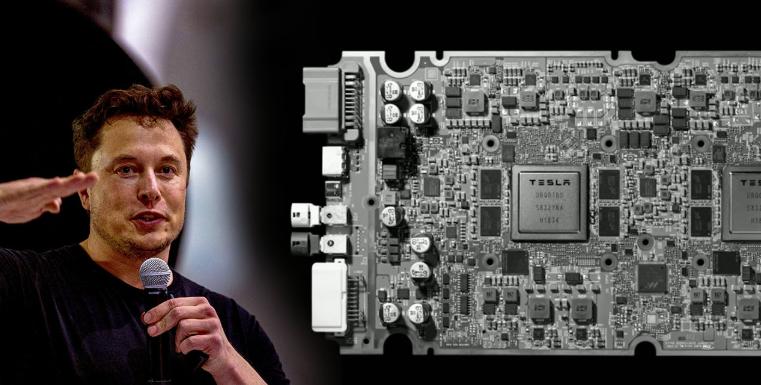
- Compute power: HW4 is reported to have something like 50 TOPS of neural processing vs around 36 TOPS on HW3 in earlier estimations. (AutoPilot Review)
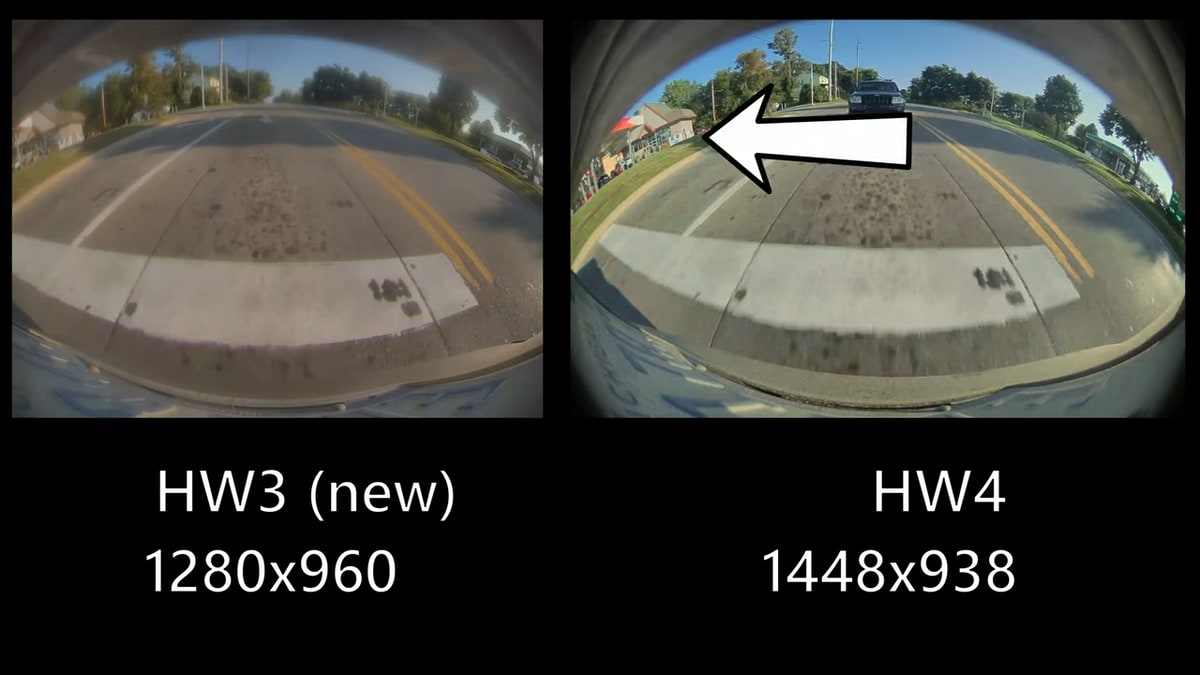
- Camera resolution: HW3’s cameras are roughly 1.2 MP sensors; HW4 uses ~5 MP sensors (or thereabouts) and provides markedly sharper imagery. (Not A Tesla App)
- Wiring, harness, connectors: HW4 introduced new wiring, new cooling, different camera-modules; retrofit from HW3 to HW4 is effectively non-trivial (or impossible). (Shop4Tesla)
How that plays out in real-world FSD behaviour
Owners and testers report that while HW3 has been remarkably serviceable (and Tesla has kept improving it), HW4 offers noticeable advantages in edge conditions. For example:
- One forum user said: > “It’s night and day. I have a Model S with HW3 … my wife has a M3P with HW4 … I can barely use mine because it’s so wonky … Hers drove us an hour to the airport and back with zero interventions…” (Reddit)
- On the other hand, some other owners argue the difference is more subtle: > “As of right now … they are essentially identical in terms of FSD performance besides some of the new features that HW4 has …” (Reddit)
- There’s also data suggesting Tesla’s software versioning is diverging: newer software builds target HW4 first; HW3 may be getting “smaller” or more constrained models to operate within its hardware limits. (Tesla Motors Club)
In short: if you have HW4, you’re more likely to get the full benefit of FSD’s latest architecture. If you have HW3, you may still get many features — but there’s a hardware ceiling. It is as though HW4 is the new highway, HW3 is still a good road, but some of the newer traffic signs refer to lanes HW3 cannot open.
Rumours & real talk: FSD v14 Lite for HW3?
Now we come to the part of the story that smells faintly of legend, hope, and that slightly uneasy feeling you get when you discover there is a “special edition” for someone else.
What’s being said
- During the Q3 2025 earnings call, Tesla executives (specifically their Head of AI & Autopilot) reportedly said that a version of FSD v14 — v14 Lite — is being developed for HW3 vehicles, targeted for Q2 of next year. (TESLARATI)
- The term “Lite” suggests a version of v14 with some features trimmed or optimized to suit HW3’s hardware limitations (lower compute, older sensors).
- Numerous owners in forums are debating whether this “Lite” version means full parity or merely “we’ll update you, but you’ll never have everything new HW4 has”. For example: > “HW3 is done. Need to buy a new car if you want the latest FSD.” (Reddit)
What this might mean (and caution)
- Tesla seems to be signalling: yes, we haven’t forgotten you HW3 owners — you will get something, but the premium stuff (trained on HW4 data, making full use of its cameras/compute) will be targeted first for HW4.
- The “Lite” version may lack certain features, may run smaller neural networks or simpler models so that it works within HW3’s limits. One article noted that HW3 under FSD v13 required significantly smaller model sizes than HW4. (Not A Tesla App)
- Some HW3 owners feel frustration: you bought early, you pay for FSD, but you might be stuck with “the good but not the best” version.
- There is a risk: if Tesla eventually decides to move compute-heavy features to exclusively HW4 (or later HW5), then HW3’s “Lite” version may become the final stop.
What to keep an eye out for
- When Tesla publishes version 14’s release notes: what features are marked as HW3 compatible vs HW4 only.
- Real-world owner reports: does v14 Lite feel noticeably worse than “full” v14 on HW4?
- Whether Tesla provides trade-in incentives for HW3 owners (some of this is already underway).
- Whether regulatory/insurance frameworks treat HW3 vehicles differently if their hardware is considered capable of fewer “autonomous” features.
The takeaway
Imagine for a moment that your Tesla is a polite, well-mannered but still somewhat adolescent chauffeur. The software is the training, the hardware is the car’s legs, arms, eyes and brain. HW3 gave your car a decent pair of legs and eyes. HW4 gave it a better pair — faster, clearer, steadier.
Now Tesla is saying: “Here’s the new dance routine (v14)!” But the car with the older legs (HW3) may have to do a slightly simpler version of the dance — that’s the “Lite” part. It will still try the pirouettes, but may not go quite as high or spin as many times as the one with HW4’s training.
If you own a HW4 Tesla — congratulations: you’re in the front row of the dance. If you own a HW3 Tesla — you’re still on the dance floor, but you may be learning steps that don’t include the very fancy spin. Tesla, to its credit, is acknowledging your presence — but also subtly pointing you toward upgrading if you want the full routine.
In short: FSD v14 is real and meaningful. HW4 hardware gives you better starting material for it. HW3 will still get attention, but perhaps in a “lite” form. If you’re a HW3 owner, you might ask: “Will my car feel nearly as good as the new one?” The answer is: maybe, but likely not exactly. And if you’re deciding whether to buy a used HW3 car with FSD, or a new HW4 car — well, there’s more than just the showroom price to think about.